
Stormwater Education and Outreach
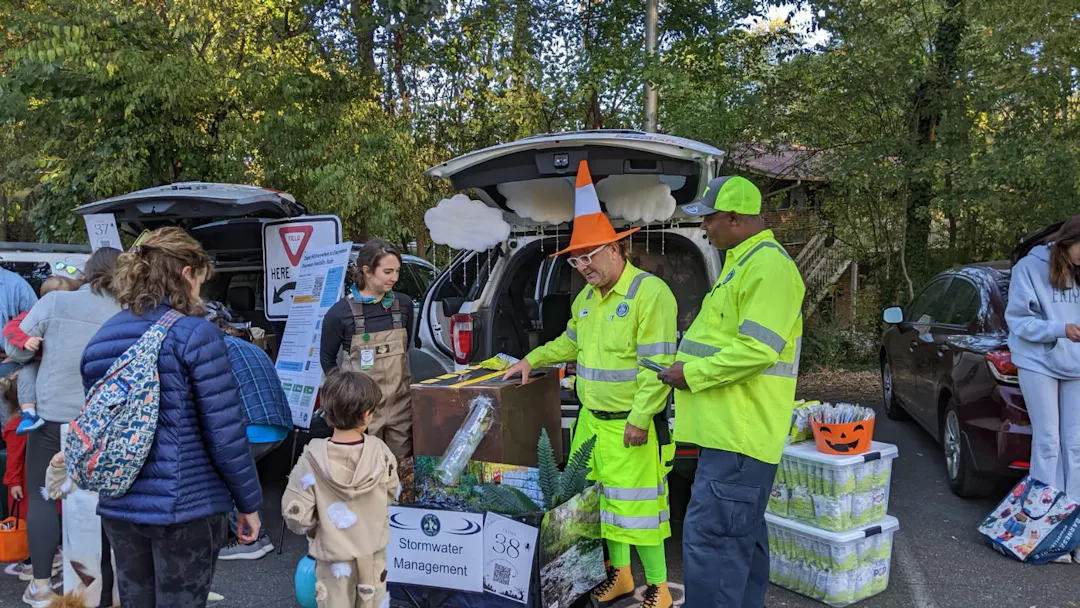
Our stormwater division provides programs, projects, and services to improve stormwater quality and manage stormwater quantity.
Education and Outreach are essential to our work because increased public awareness of stormwater promotes community practices that help us better manage stormwater in Chapel Hill.
Our work is guided by a few key documents that can be found on our website:
- Stormwater Management Plan: requirement of the federal and state government, which we update routinely as part of our National Pollutant Discharge Elimination System permit
- Stormwater Master Plan: strategic document built from extensive community engagement and adopted by Council in 2014
- Subwatershed Studies: one of many initiatives called for in the Master Plan and adopted by Council to help move us toward our goals
This page highlights what we do and provides information on educational and volunteer opportunities, serving as one way the community can learn about our work and share feedback with us.
-
Chapel Hill’s Stormwater Drainage Crew Counts on the Community
Share Chapel Hill’s Stormwater Drainage Crew Counts on the Community on Facebook Share Chapel Hill’s Stormwater Drainage Crew Counts on the Community on X (formerly Twitter) Share Chapel Hill’s Stormwater Drainage Crew Counts on the Community on Linkedin Email Chapel Hill’s Stormwater Drainage Crew Counts on the Community link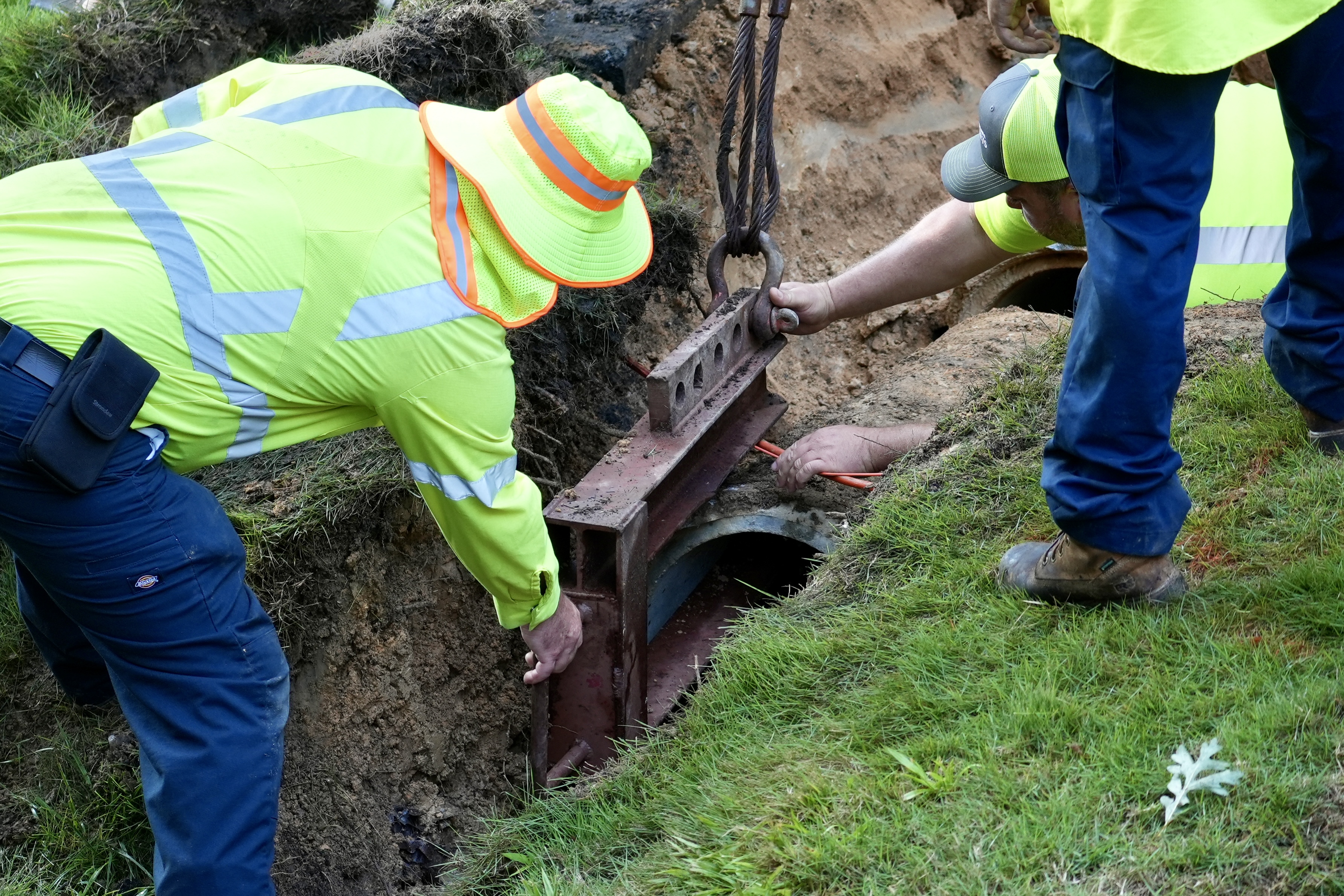 The drainage crew, housed within Public Works’ Stormwater Division, is a team of four dedicated staff members who help maintain the Town’s stormwater infrastructure and four major creeks and oversee street sweeping on Town roads.
Earlier this summer, Public Works’ Streets staff noticed a sinkhole on a road in a neighborhood less than half a mile from Booker Creek. While this is a specific issue in one neighborhood, it represents a problem that can happen anywhere. Reports of potential issues, whether they’re from staff or community members, help Town staff to respond promptly.
In this case, the Streets and Stormwater crews were out at the site of the sinkhole early the next morning to repair the broken stormwater pipe and make sure the road was safe.
We all play a role in stormwater management here in Chapel Hill. Our crew sees a lot when they are out around Town, but you know your neighborhood best. If you see a potential stormwater issue, let us know! You can email us at stormwater@chapelhillnc.gov, call us at 919-969-RAIN (7246), or report the issue on Resident Reporter by visiting chapelhillnc.gov/residentreporter.
Here are a few signs to watch for in your neighborhood:
- Water pooling or backing up where it should be flowing. This can be a sign of a blocked gutter, storm drain, ditch or stream.
- New or worsening dips in the road, particularly if you notice the asphalt cracking near a storm drain. Sometimes this is a sign that there’s a sinkhole forming.
- Debris or large objects in the path of flowing water. Tree branches, leaf piles, and trash roll carts can all become drainage blockages.
-
Community Cleanups Protect Our Water
Share Community Cleanups Protect Our Water on Facebook Share Community Cleanups Protect Our Water on X (formerly Twitter) Share Community Cleanups Protect Our Water on Linkedin Email Community Cleanups Protect Our Water linkDu
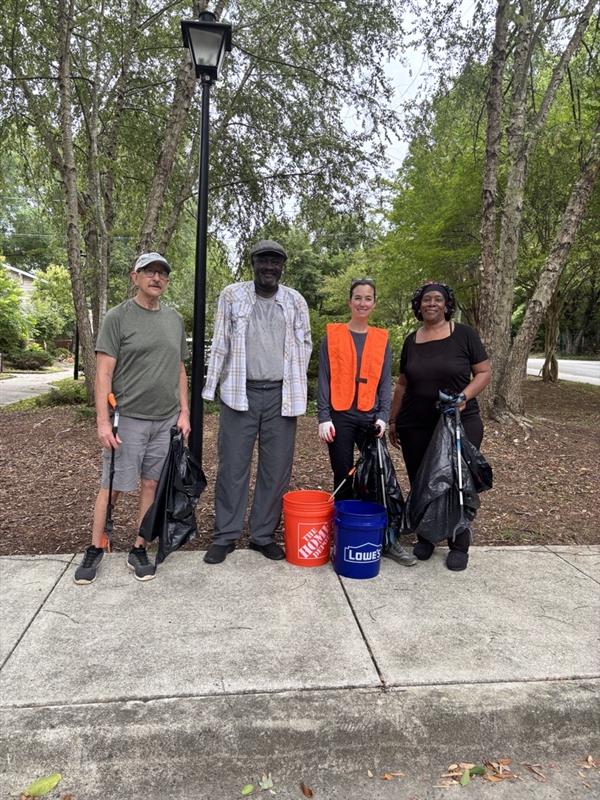 ring May and June, Stormwater and Housing partnered on community cleanups in all 12 of Chapel Hill’s public housing neighborhoods. Twenty-four volunteers joined us to collect over 90 bags of trash! We look forward to continuing the partnership between Town departments and working to properly dispose of waste and keep trash out of our waterways.
If you are interested in hosting a community cleanup in your neighborhood, Stormwater can help! Contact us on this page by submitting a “Question,” or send an email to Merrill Robinson at mrobinson2@chapelhillnc.gov to get started.
-
Open House Recap
Share Open House Recap on Facebook Share Open House Recap on X (formerly Twitter) Share Open House Recap on Linkedin Email Open House Recap link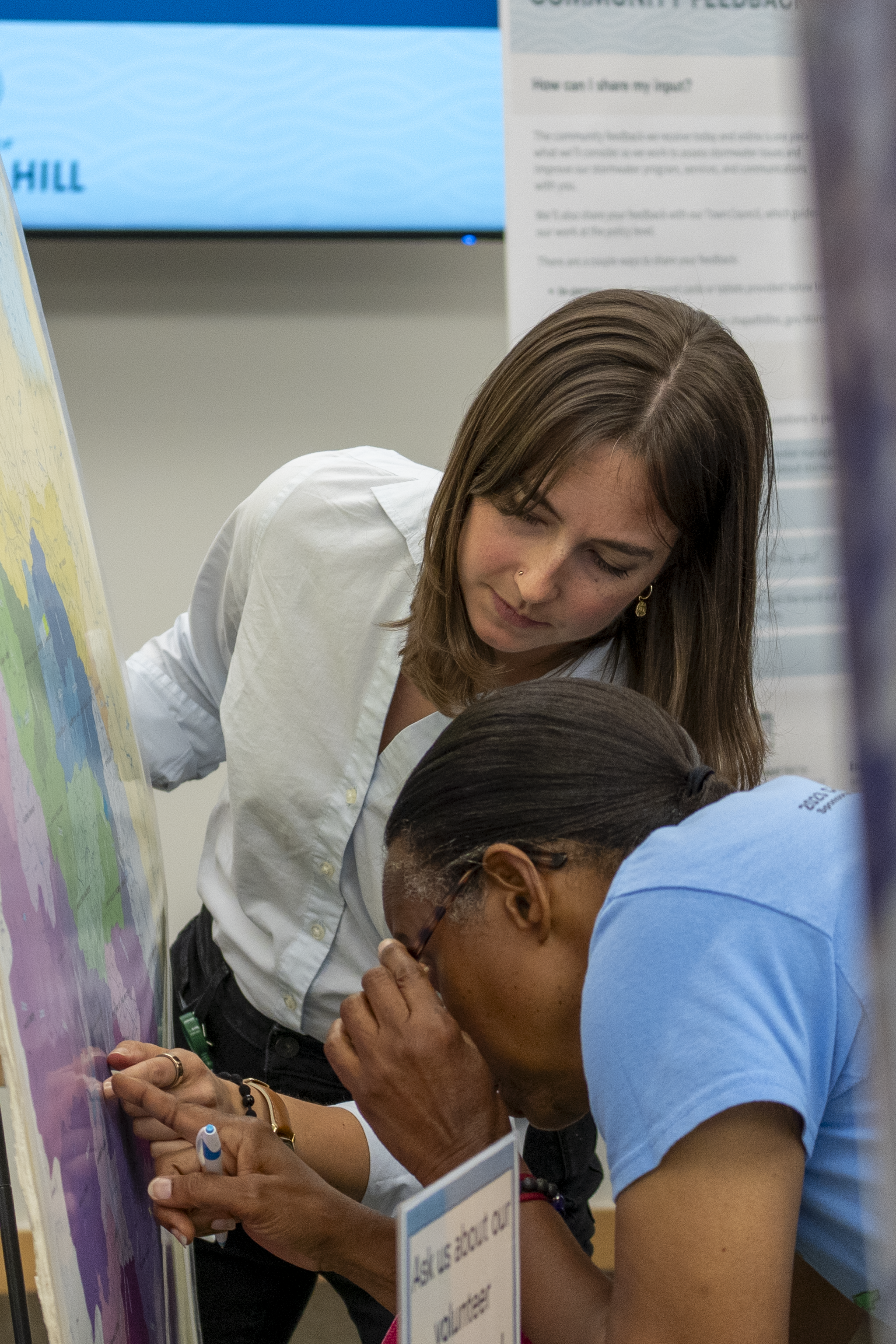
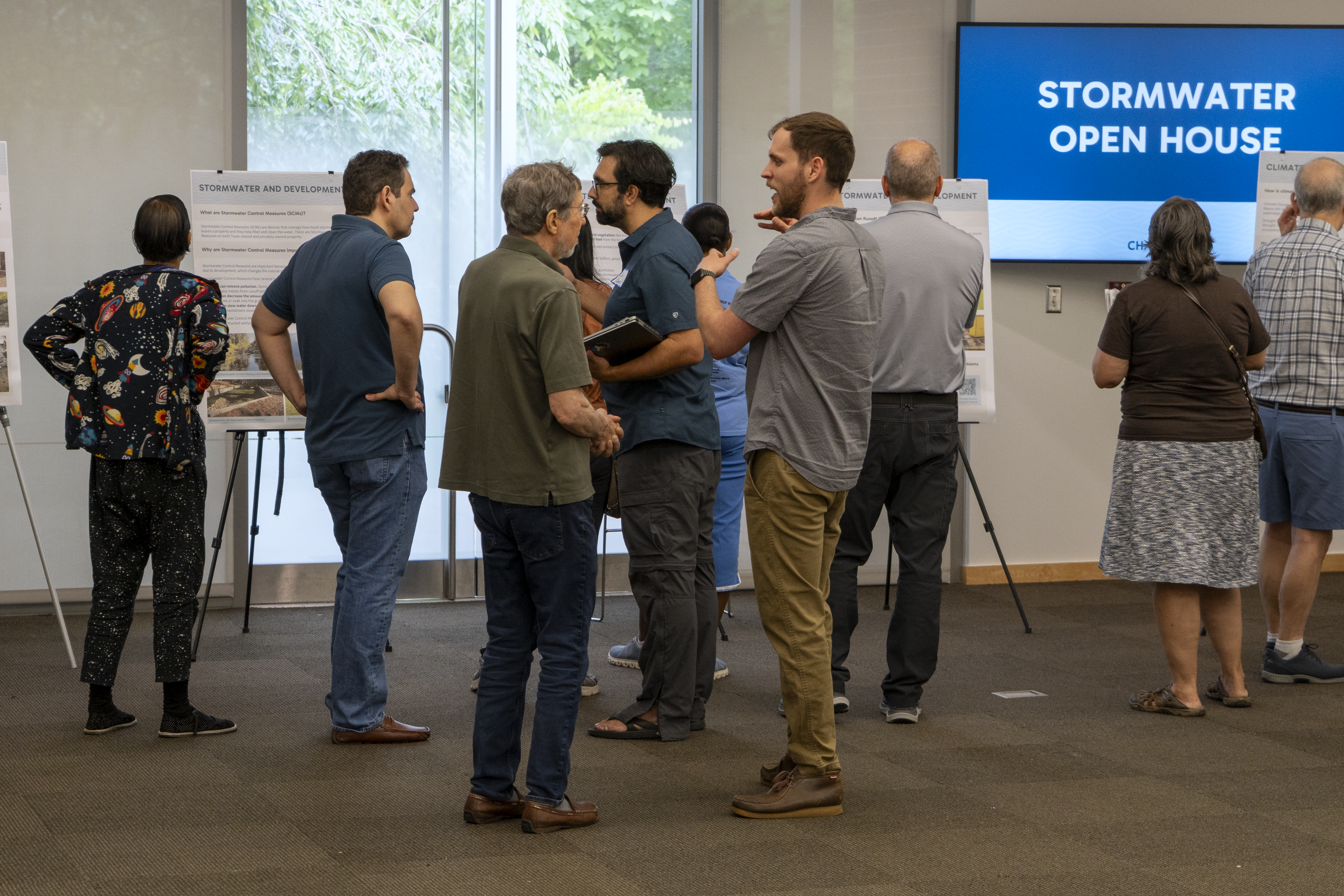
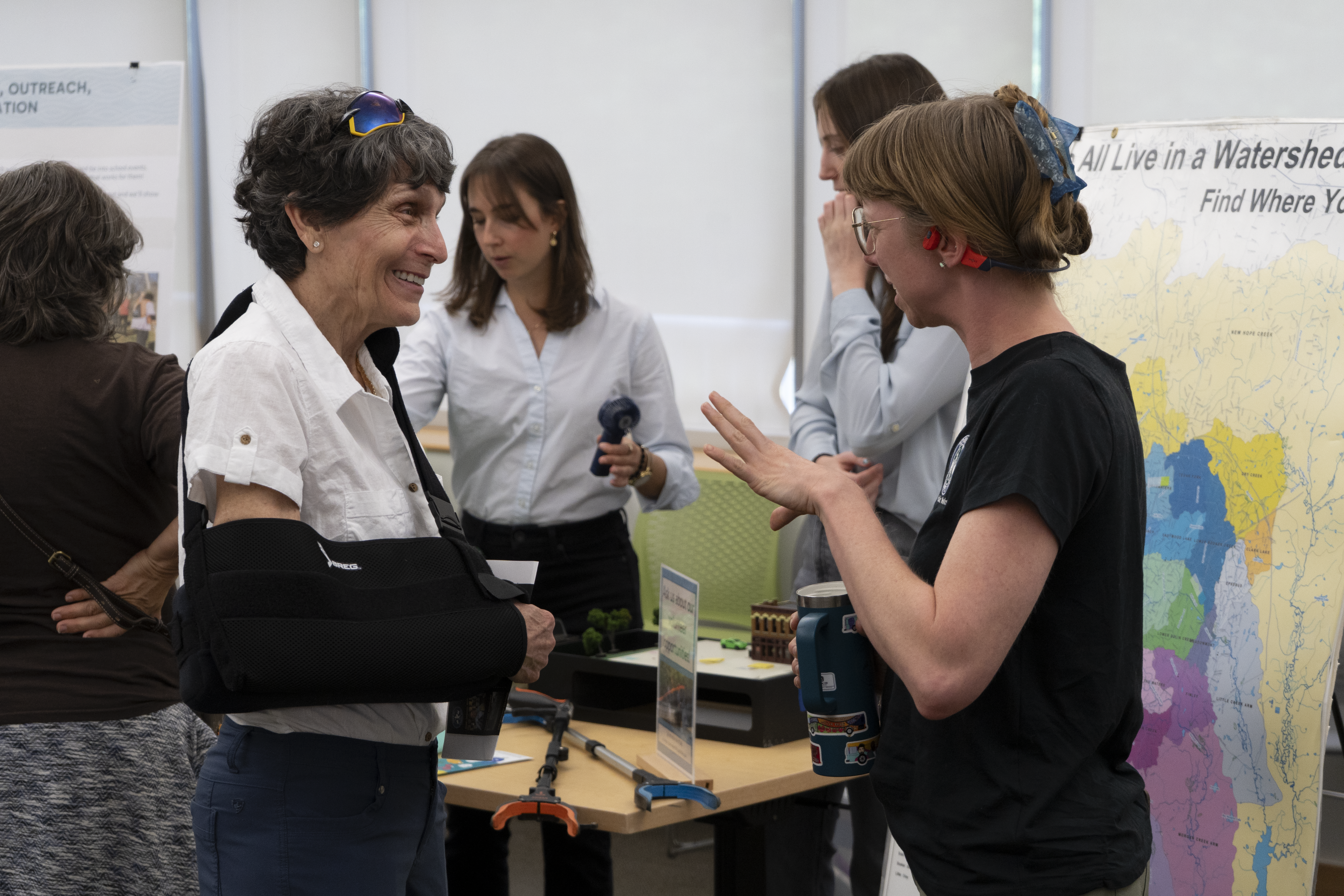
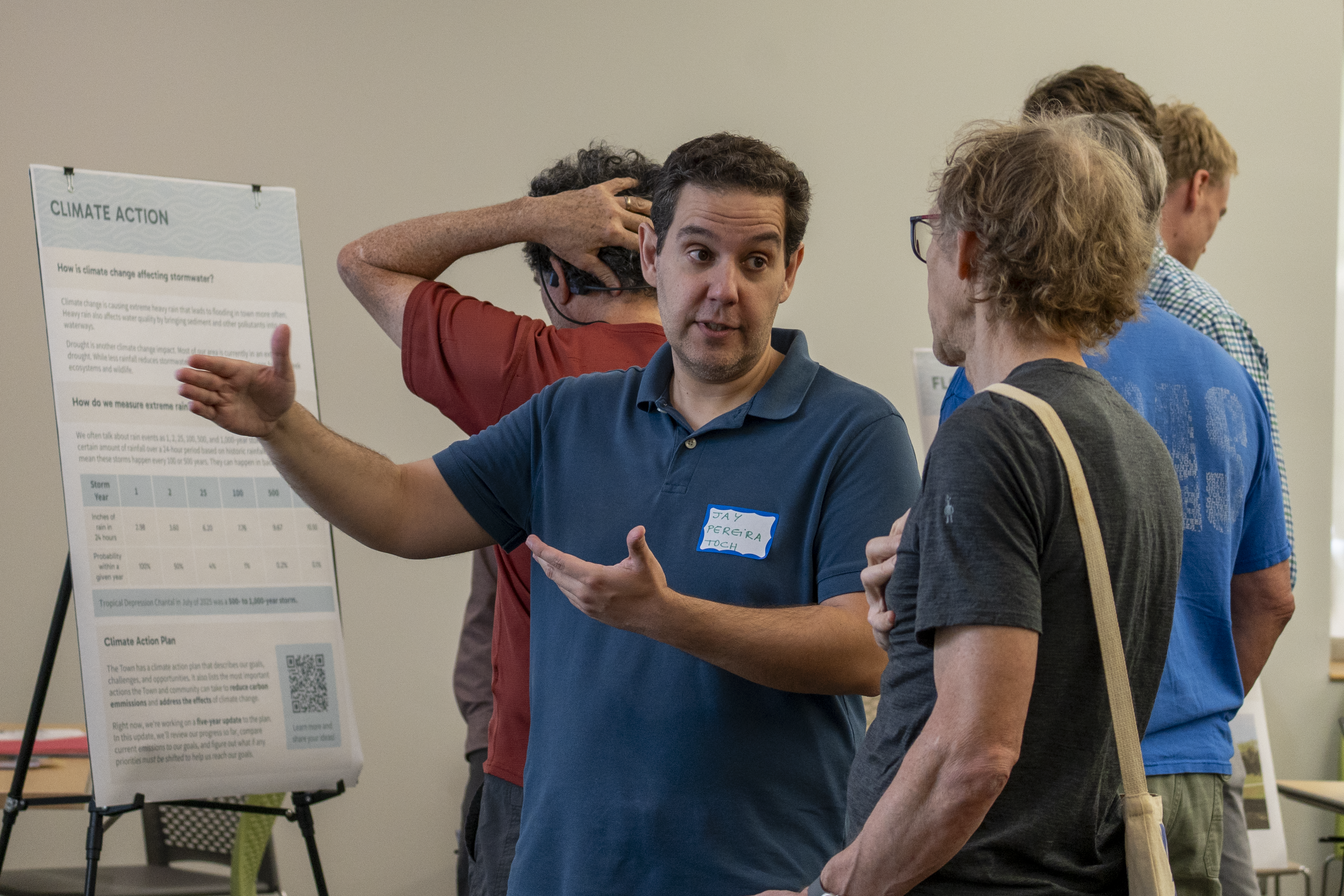
On June 16, we hosted two stormwater open houses. 64 people attended the sessions and 15 people provided written feedback.
Community members still have time to participate online by reviewing the posters and sharing their ideas in the coming weeks. We’ll collect all comments and questions from both the open houses and our online engagement site survey and share that information with the Town Council in the fall.
-
Open House Next Week
Share Open House Next Week on Facebook Share Open House Next Week on X (formerly Twitter) Share Open House Next Week on Linkedin Email Open House Next Week link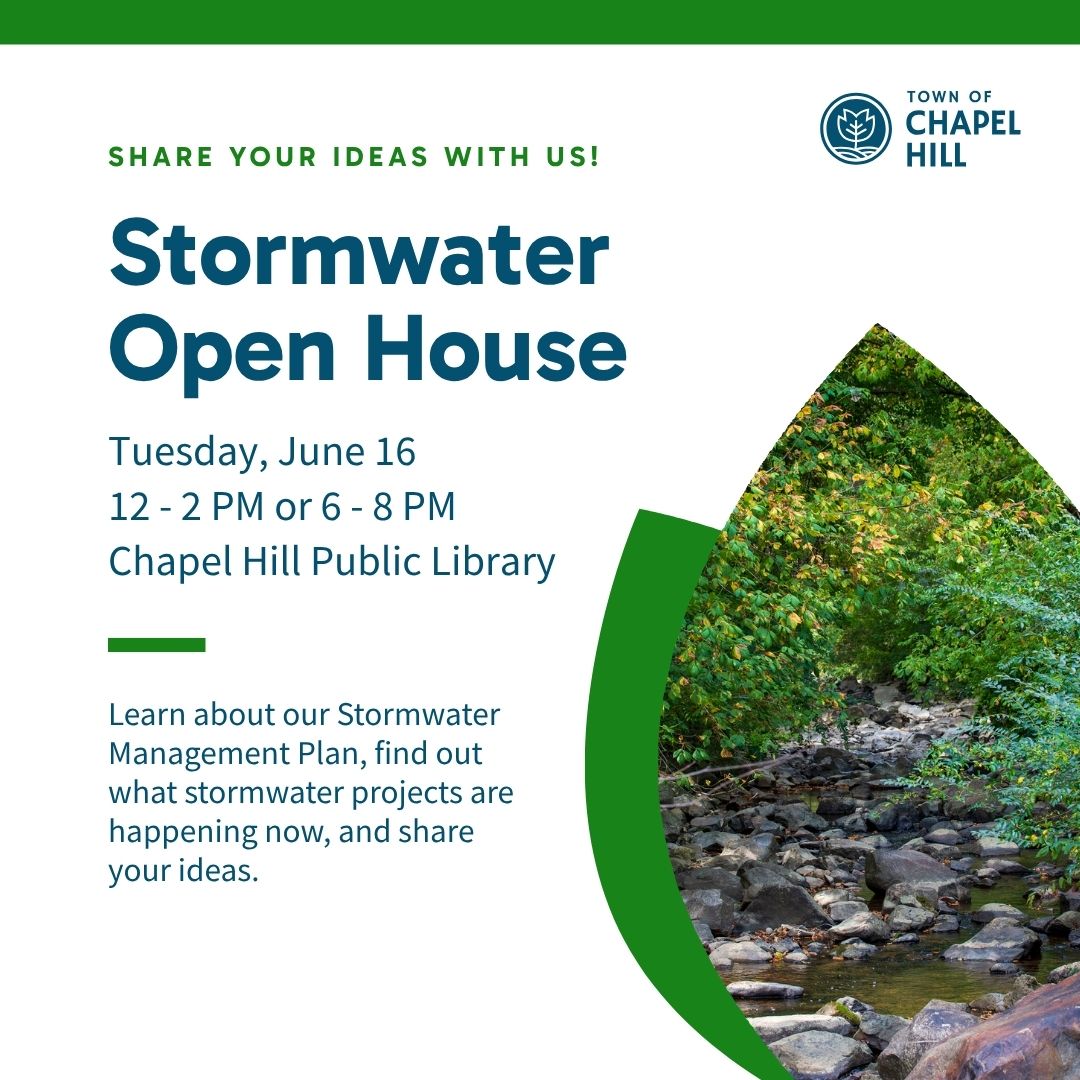
We're excited to share our work with you next week!
Our Stormwater team is hosting two sessions at the library on Tuesday, June 16: one session from 12 to 2 p.m. and one session from 6 to 8 p.m. Come meet our team, provide feedback, and ask us questions. Here's what you can come learn about:- Stormwater basics
- Water Pollution
- Stormwater and development
- Flooding
- Volunteer opportunities
-
Crafts with the Stormwater team!
Share Crafts with the Stormwater team! on Facebook Share Crafts with the Stormwater team! on X (formerly Twitter) Share Crafts with the Stormwater team! on Linkedin Email Crafts with the Stormwater team! link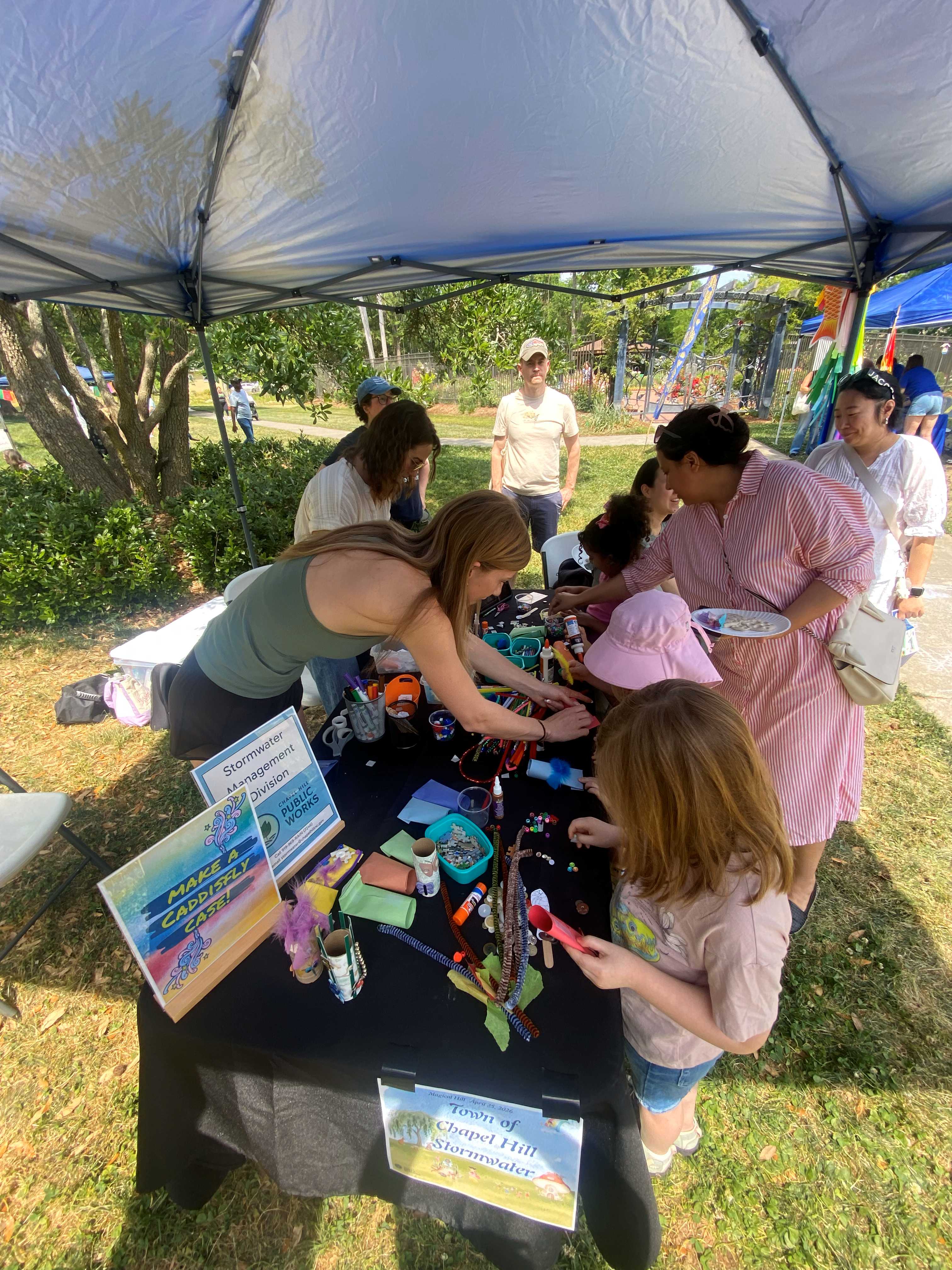
On Saturday, April 25th, our we made Caddisfly Cases with children at the Magical Hill event at the Chapel Hill Community Center.
Caddisflies are insects that live in creeks as larvae. They're important, both as food for fish and also as indicators of good water quality. They can't live in polluted water, so when we find them in our streams, we know the water quality is good.
There are several types that live here in Chapel Hill, and some of them use a sticky silk substance (imagine spider silk combined with double sided tape) to build themselves protective cases out of whatever is around them in the stream. They use pebbles and bits of sticks and anything else they can find.
At Magical Hill, we made the Caddisfly Cases out of colorful construction paper, and everyone got a caddisfly larva on a wooden craft stick to "live" inside the case they made. We decorated the cases with things like spare buttons, puzzle pieces, pom poms, rhinestones, and colorful tissue paper, as if the caddisfly larva had built its case out of what it could find around us.

